
The short answer
AC installation in Simi Valley starts with a room-by-room load calculation, because inland valley heat punishes undersized and oversized systems alike. We help you choose between a replacement AC and a heat pump, check ducts and electrical before install day, and confirm which utility rebates apply to your address.
A new air conditioner in Simi Valley has to handle long, hot summer afternoons and the dry heat that fall Santa Ana winds can bring. Ventora HVAC Repair Service installs central air conditioners and heat pumps for homes in ZIP codes 93063 and 93065, about 14 miles west of our base in Reseda. This page covers what goes into an installation here: sizing the system for an inland valley home, choosing between a central AC and a heat pump, preparing ducts and electrical, and sorting out which rebates may apply to a home in Ventura County.
Sizing an AC for Simi Valley's inland heat
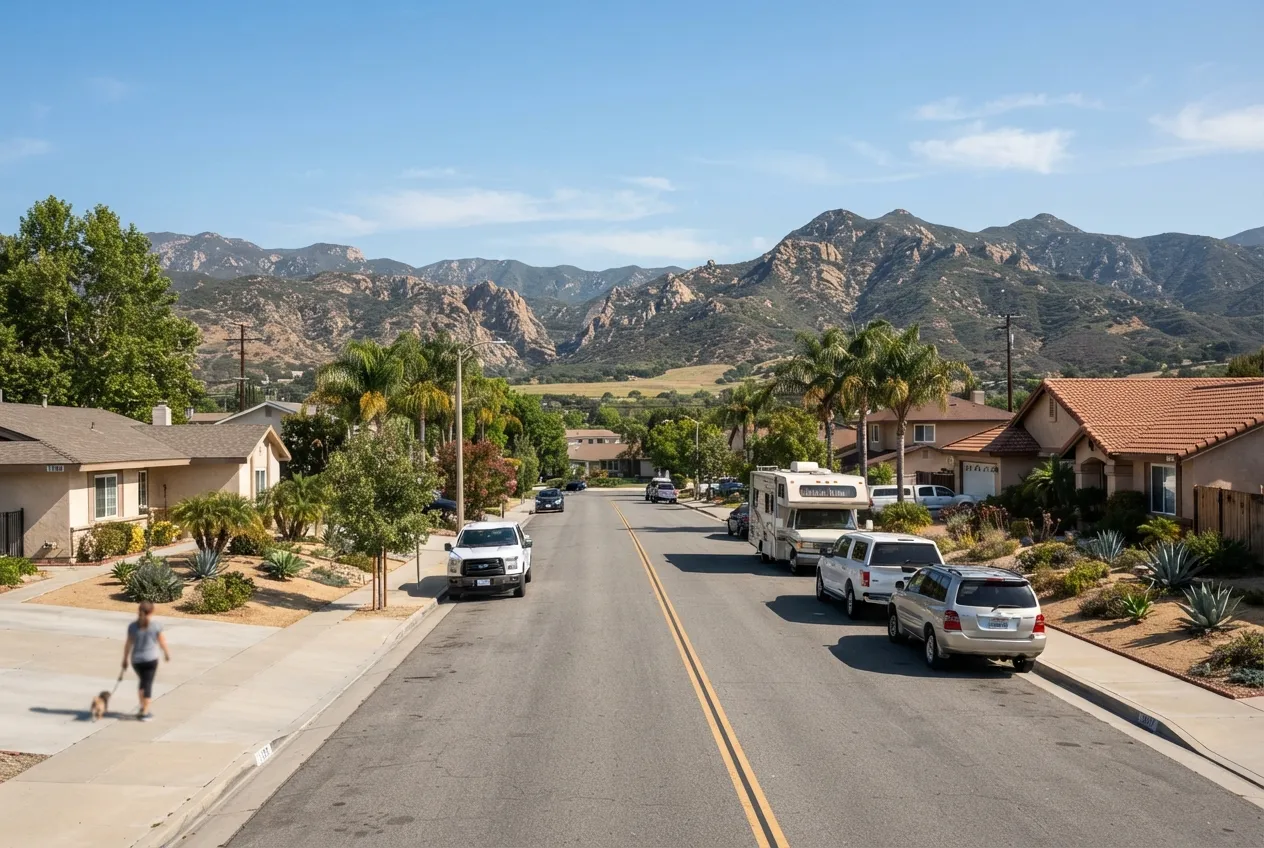
Simi Valley sits inland, and like other valleys in Southern California it runs much hotter in summer than neighborhoods near the coast. That makes sizing the most important part of an installation. A unit that is too small runs nonstop on the hottest afternoons and still leaves rooms warm. A unit that is too large cools the air quickly but shuts off before it removes much moisture, cycles on and off often, and wears out parts sooner.
We size equipment with a room-by-room load calculation. We don't just match the tonnage of the old unit or go by square footage alone. The calculation accounts for details that vary a lot from house to house:
- Which way the home faces and how much west-facing glass it has
- Attic insulation depth and whether ducts run through a hot attic
- Window type, shading, and ceiling height
- Additions, converted garages, or rooms the old system never cooled well
- How many people live in the home and how it is used during the day
Replacing the AC or switching to a heat pump
Many Simi Valley homes have a gas furnace paired with a split air conditioner. When the AC needs replacing, you have two main paths. You can replace the outdoor condenser and indoor coil and keep the existing furnace, or you can switch to a heat pump that cools in summer and heats in winter.
Winters here are mild, so a heat pump can often cover most or all of a home's heating. It works on the same refrigerant cycle as an air conditioner, only reversible. A heat pump can make sense if your furnace is also near the end of its life or you want to rely less on gas. Keeping the furnace can make sense if it is newer and in good shape. We walk through both options with your equipment, ducts, and electrical panel in front of us.
Cooling efficiency is listed as SEER2, and heat pump heating efficiency as HSPF2. Higher ratings use less electricity for the same output. That matters in a city where the AC runs hard for months at a time.
Ducts, electrical, and the details people overlook
A new unit connected to leaky or undersized ducts will not perform the way its rating suggests. Before installation we check the ductwork for disconnected runs, crushed flex duct, and missing insulation, especially in attics, where summer temperatures climb well above the outdoor air. Return air size matters too. Many older homes have a single small return that starves a new system of airflow.
We also check the electrical circuit and disconnect for the outdoor unit, the condensate drain route, the thermostat wiring, and the pad or mounting for the condenser. Finding these issues before installation day keeps the job from stalling halfway through.
What installation day looks like
Most straightforward replacements are finished in a day. Jobs with duct changes or a switch to a heat pump can take longer. A typical installation includes:
Besides Simi Valley, we install systems in Agoura Hills, Hidden Hills, Calabasas, Santa Clarita, and San Fernando.
- Recovering refrigerant from the old system and removing the old equipment
- Setting the new outdoor unit and the indoor coil or air handler
- Installing new refrigerant lines, or flushing existing ones when they can be reused
- Pulling a vacuum on the system and charging it to the manufacturer's specification
- Handling any permit the city requires for the work
- Testing airflow, temperatures, and the thermostat, then showing you how to operate the system and change filters
Rebates and tax credits for Simi Valley homes
Simi Valley is outside the City of Los Angeles, so the LADWP heat pump rebates you may hear about from friends in the San Fernando Valley generally do not apply here. Many homes outside the city are served by Southern California Edison, and the rebates available depend on the utility that serves your address. We confirm the current offer for your home before including it in a quote.
The federal Energy Efficient Home Improvement Credit (25C) covered qualifying heat pumps placed in service before December 31, 2025. It is not available for new installations after that date, so don't count it toward the cost of a system installed now.
More services in Simi Valley
- AC Repair in Simi Valley
- Heating Repair in Simi Valley
- Heat Pump Installation in Simi Valley
- Furnace Repair in Simi Valley