
The short answer
Duct cleaning helps when your ducts are dirty but still in good shape. Signs like dust blowing from registers, musty odors, or recent remodeling point to it. Ventora inspects first, then recommends cleaning, targeted repair, or replacement based on what we actually find.
Your ducts carry all the air your furnace and air conditioner move through the house. In Reseda and the rest of the San Fernando Valley, that air works hard. Summers run much hotter here than near the coast, and fall Santa Ana winds push dry dust into attics and crawlspaces. Over time, ducts collect debris, joints loosen, and insulation breaks down. Ventora HVAC Repair Service cleans, inspects, and repairs duct systems for homeowners in Reseda and nearby communities. We tell you plainly whether cleaning alone will help or whether something bigger is going on.
Signs Your Ducts Need Attention
Not every home needs duct cleaning on a set schedule. It makes sense when there's a specific reason, and the reasons usually show up in ways you can see, smell, or feel.
The last two signs on this list often point to a damaged duct rather than a dirty one. Uneven rooms and filters that clog quickly can come from crushed, disconnected, or leaking ducts that pull in attic air. That's why we inspect before we recommend cleaning.
- Dust blowing out of supply registers when the system starts, or gray buildup on the register grilles
- Dust settling on furniture again soon after you clean
- A musty or stale smell when the heat or air conditioning runs
- Visible debris, pet hair, or construction dust inside the return grille or filter compartment
- Signs of rodents or insects in the attic, crawlspace, or duct runs
- Remodeling, drywall work, or sanding done while the system was running
- Rooms that stay noticeably hotter or cooler than the rest of the house
- A filter that clogs much faster than it used to
What We Check During a Duct Inspection
A good duct cleaning starts with a careful look. Before we quote any work, we inspect the system from the equipment out to the registers. That way you know what you're paying for and why.
If we find mold or signs of pests, we'll show you what we see and explain your options. Sometimes the source, such as a leak or an entry point, has to be fixed first. Otherwise cleaning won't do any lasting good.
- Supply and return registers, grilles, and the boots behind them
- The return plenum and filter rack, where a lot of debris collects first
- Duct runs in the attic or crawlspace, checking for kinks, crushing, sagging, and disconnected joints
- Tape and sealant at connections, which can dry out and fail in hot attics
- Duct insulation and the outer jacket on flexible duct, which can tear or wear out
- Signs of moisture, mold growth, or pest activity inside or around the ducts
- The blower wheel and evaporator coil, since a dirty blower or coil can spread debris right back into freshly cleaned ducts
- Airflow at the registers, compared room to room
Cleaning, Repair, or Replacement
Not every duct problem calls for the same fix. Here's how we think it through with you.
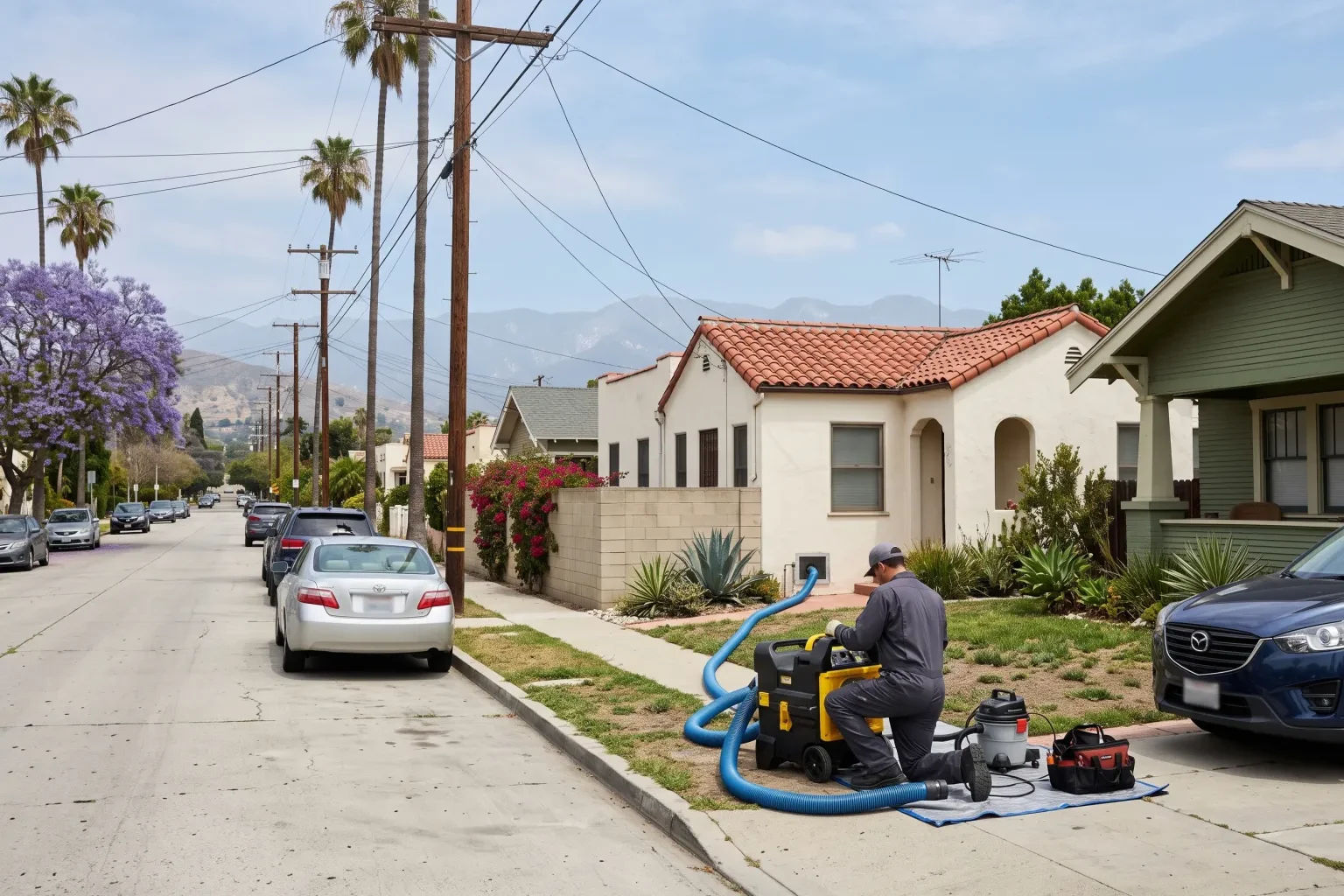
Cleaning makes sense when the ducts are in good structural shape but dirty. We use agitation tools to break debris loose from the duct walls. Negative-pressure equipment then pulls that debris out of the system. We also clean the registers, the return, and other components we can reach.
Repair is usually the right call when most of the system is sound but certain sections have problems. That can mean resealing leaky joints, reconnecting a run that has pulled loose, replacing a crushed section of flex duct, adding support where duct sags, or re-wrapping damaged insulation.
Replacement is worth considering in three situations: flexible duct is brittle, torn, or collapsing throughout the attic; insulation has broken down across much of the system; or the layout itself is the problem, such as undersized runs that never delivered enough air to certain rooms. Cleaning old duct that is falling apart usually isn't money well spent.
If you're also planning to replace your furnace or air conditioner, look at the ducts at the same time. New equipment needs ducts that are sized and sealed to match it. If a new gas furnace is part of the plan, keep in mind that South Coast AQMD rules limit emissions from furnaces installed in our region. Those rules have been changing, so check the current requirements before you choose equipment. If you're considering a heat pump, LADWP customers may be able to apply for a rebate after installation. Homes served by Southern California Edison have different offers, so we confirm what applies to your address.
What Affects the Cost
Duct jobs vary widely from house to house, so we give you a quote after the inspection, not before. These are the main factors:
We'll walk you through what's included and what's optional, so you can decide what makes sense for your home and budget.
- The size of the home and the number of supply and return registers
- How many systems the house has and where the equipment sits
- Attic or crawlspace access, including tight spaces and low clearance
- How much debris has built up, and whether it includes construction dust, pet hair, or pest contamination
- Whether repairs such as sealing, reconnecting, or replacing sections are needed
- Whether the blower, coil, or other equipment also needs cleaning
- The type of duct: flexible duct, sheet metal, or duct board
How a Visit Works
We keep the process straightforward. Here's what to expect.
Someone needs to be home to give us access to the attic or crawlspace and the indoor equipment. Clearing a path to those areas before we arrive helps the visit go faster.
- Scheduling: We set an arrival window and ask a few questions about what you've been noticing.
- Inspection: The technician checks the equipment, the duct runs, and the registers, and measures airflow room by room.
- Explanation: We show you what we found, with photos where they help, and lay out your options.
- The work: For cleaning, we protect the floors near the work area, cover the registers, connect the vacuum equipment, and clean the system section by section.
- Wrap-up: We replace the filter if you'd like, run the system, and check airflow again so you can feel the difference at the registers.